How Much Are Wine Tours, Usually?
Compare actual full-day costs and distinguish transport-only, tasting-inclusive and lunch-inclusive fares.
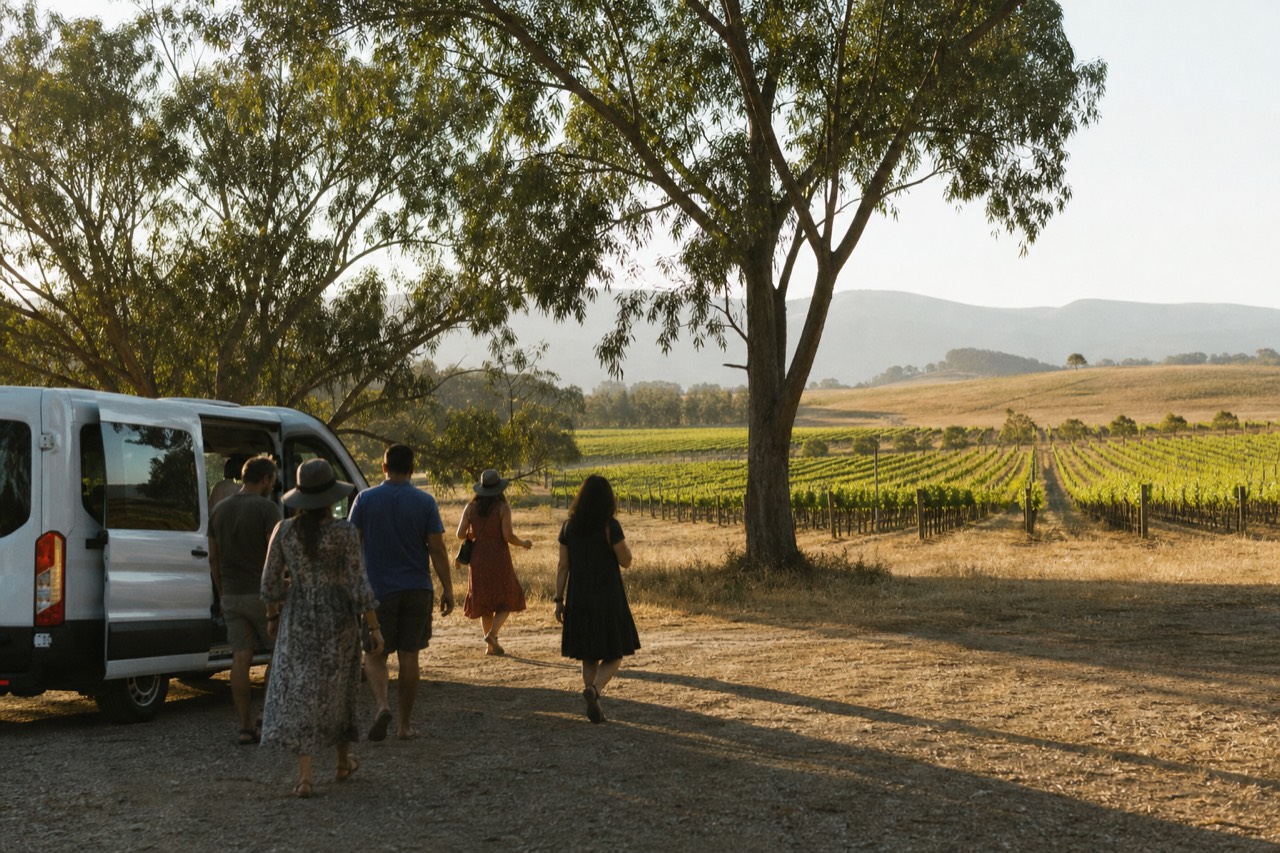
Two people can pay very different amounts for a wine tour on the same road, on the same Saturday, and both get exactly what they were sold. The words cover a seat in a vehicle at one end and a catered day with tasting fees included at the other. Nobody is necessarily being overcharged. The important difference is what you must still buy when you arrive: tastings, lunch, extra drinks and bottles can all change the total.
How much are wine tours, usually?
Expect a full-day group wine tour to be priced per person, with the spread driven by inclusions rather than wine quality alone. Transport-only seats sit at one end; guided days with tastings, meals or extra attractions include more of your spending upfront. Compare quotes for your actual date.
Three bands appear in almost every wine region with an organised day-tour market, and once you can name them the price stops being mysterious.
The bottom band is transport and company. Someone else deals with the roads and everything else is a transaction you make yourself, which makes it the cheapest way in and the band where your final spend is least predictable. The middle band is the all-inclusive day: tastings covered at every stop, a set lunch with wine poured, and a listing price that is the whole price.
The top band may buy a smaller group or a more elaborate itinerary. Fewer seats, longer hours, a booked restaurant table instead of a function room, sometimes a second attraction folded in. A higher fare can reflect the vehicle, meal or included attractions; compare the actual itinerary.
What actually moves the price of a wine tour?
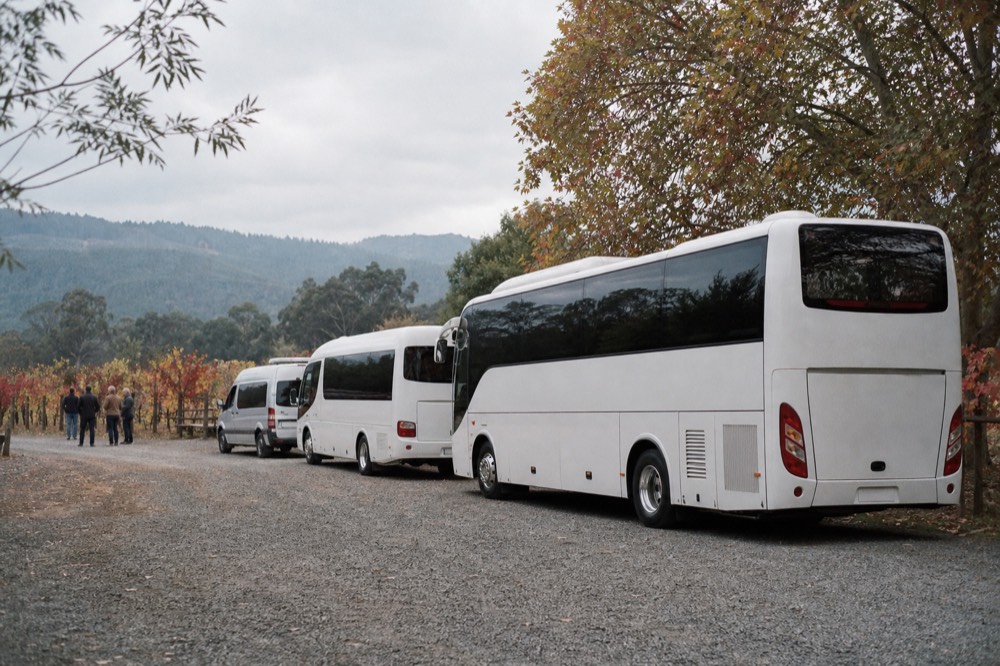
Four levers, in order of impact: group size, whether tastings are included, whether lunch is included, and how many hours the day runs. Wine quality barely registers. A twenty-four-seat coach spreads its fixed costs across twenty-four fares. A six-seat van spreads the same driver and vehicle across six.
Group size matters because the driver and vehicle costs are shared across the paying guests. A smaller vehicle can cost more per person without visiting more wineries. Decide how much a smaller group matters to you, then compare the actual group caps and fares.
Inclusions come next, and this is where listings get slippery. "All-inclusive" is used to mean all tastings included, lunch separate, and it is also used to mean genuinely everything. Read the lunch line specifically rather than trusting the label.
Hours matter more than people expect, because a ten-hour day fits fewer paying seats into a week than an eight-hour one. Add extra attractions and the top of any market makes sense: a day including a wildlife sanctuary is carrying an entry ticket inside the fare.
| Lever | What it does to the price | Typical swing |
|---|---|---|
| Group size | Fixed vehicle and driver costs split across fewer fares | Compare the actual cap and fare; no fixed price multiplier |
| Tastings included | Operator absorbs the per-door fee at every stop | Fee varies by venue and flight |
| Lunch included | Operator pre-books and pays for a set meal with wine | Menu and extra drinks vary |
| Hours | Longer days mean fewer departures per vehicle per week | 8 hours versus 10 adds a clear premium |
| Extra attractions | An entry ticket is folded into the fare | Check whether the entry is included |
| Vehicle class | Coach, minibus, or a small executive van | Visible across the entire ladder |
What does a real price ladder look like?
A real comparison starts with three formats: the Red Route loop with tastings paid separately; a mixed-tasting guided day with lunch extra; and a winery tour that includes lunch and tastings. Wildlife-and-wine days add another attraction, while smaller wine-focused tours offer a different pace.
The table compares what each format buys. Obtain all fares in the same currency and for the same date before adding your expected extras; an old headline fare is not a reliable current quote.
| Format | Tastings | Lunch |
|---|---|---|
| Red Route transport loop | Paid separately | Paid separately |
| Mixed wine, gin and chocolate day | Listed tasting venues included | Paid separately |
| Guided winery-lunch tour | Listed winery tastings included | One-course lunch with wine included |
| Wine-focused Vinetrekker day | Winery tastings included | Main-course winery lunch included |
| Wildlife-and-wine day | Listed winery tastings and sanctuary entry included | Listed lunch included |
Compare the mixed-tasting day with the lunch-inclusive winery tour. One leaves the meal to you; the other includes a winery lunch with a glass of wine. Add the meal you would actually buy to the first quote, in the same currency, before deciding which is better value. The difference can narrow, but savings are not guaranteed.
The loop gives you control of your spending as well as your stops. Add your chosen tasting fees and meal to the transport fare, then compare that total with a guided ticket.
A guided tasting day with lunch purchased separately is a useful middle option. Compare the included tastings, meal choices and minimum departure numbers on the booking page. Do not budget for a complimentary bottle unless it is explicitly included in the option you select.
Do you still pay for tastings on top of the ticket?
On the Red Route transport-only loop, tasting fees and lunch are separate. On guided tours, read the individual inclusion list: a low fare does not automatically exclude tastings, and “wine tour” does not automatically include every fee. Reserve flights and bottle purchases may cost extra.
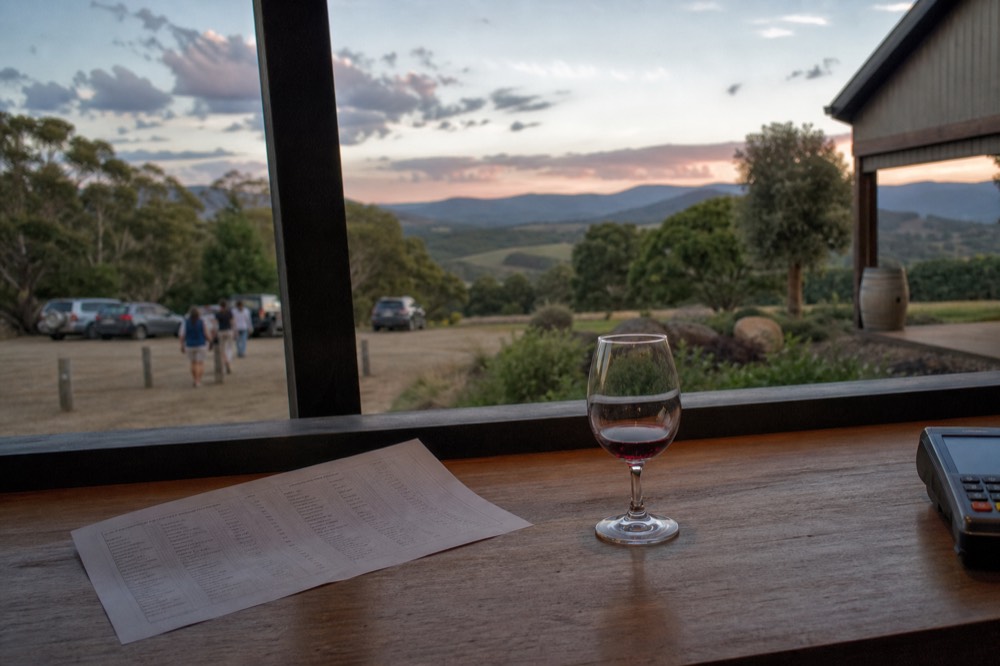
Tasting fees can move a transport-only day into the same spending range as a guided one. Standard and reserve flights often have different prices. Check each chosen venue’s current fee and booking requirement before you add it to your route.
A fee waived against a purchase is an incentive, not free wine. As a hypothetical example, four tasting fees of A$20 add A$80 per person before lunch. Buying a bottle to redeem each fee may increase your total spending. Compare the bottles you actually want, not just the fees you hope to recover.
Not every stop charges admission. Cheese and chocolate purchases are different from paid wine flights, and the Yarra Valley Chocolaterie is also a shop. Distinguish entry, a booked tasting session and anything you buy to take home.
What is never in the price, and what should never be?
Bottles you buy, optional add-ons like a distillery session or a wildlife encounter, and anything you order beyond a set menu. What should never be in your budget in Australia is a tip. Tipping tour guides and cellar-door staff is not normal nor required here, and it is entirely optional if you insist.
The tipping question comes up constantly from American travellers and the answer is genuinely different here. Australian guides are paid properly and nobody works for gratuities. An operator in one of Australia's other major wine regions puts it plainly on its own FAQ page: it may be customary in the United States, but it is not normal nor required in Australia, and the same goes for tour guides. A written review is worth far more to a small operator than cash in hand. We take that apart in what tipping actually looks like on Australian wine tours.
Bottle purchases are the most personal part of the budget. Set an amount before you leave. Optional encounters, additional drinks and menu upgrades can also sit outside the tour fare; check the selected booking option rather than assuming every activity mentioned on a route is included.
One cost never appears on a listing: the person who does not drink. Drive yourself and one member of your party pays full freight for a day they cannot have. Victoria's limit is 0.05 BAC on a full licence and zero for learner and probationary drivers, and cellar-door staff must refuse anyone intoxicated. That is the economic case for booking a tour, and it is stronger than any discount.
How do you tell an overpriced wine tour from a fair one?
Compare total day cost, not listing price. Divide the fare by the number of hours and the number of included tastings, then add what you will actually spend on fees and lunch. A fair tour states its group cap, names its wineries, and says clearly whether lunch and tastings are in the ticket. An overpriced one is vague on all three.
Three checks separate a fair price from a padded one, and none require knowing anything about wine.
First, does the listing describe the winery route? A named itinerary helps you compare, while substitutions may still be necessary. Second, does it state a group cap? A small-group fare buys a different vehicle experience from a larger coach, and the description should make that distinction clear.
Third, run the total. Take the fare, add tasting fees at each door if they are not included, add lunch if it is not included, then compare. That exercise may narrow or widen the apparent gap; the outcome depends on your selected quotes and extras. For the itemised version, what a Yarra Valley wine day actually costs works through every fee line by line, and which tours put lunch in the ticket sorts the market on the inclusion that moves the total most.
One last signal costs nothing to check: the cancellation terms for the exact option you choose. Minimum numbers and weather can affect departures separately from your right to cancel. If the broader question is whether guided transport beats driving yourself, whether a winery tour earns its price works through that decision, and the Melbourne day-tour lineup compares formats.
For a useful benchmark, the all-inclusive winery tour includes tastings and a winery lunch with wine. Personal purchases remain separate.
Match The Day To Your Plans And Compare Costs
Editorial starting point. Confirm your party's age, access needs and departure details on the listing.
From Melbourne: Hop On Hop Off Yarra Valley - RED Route: 4 stops at wineries from the timetable provided; Bottled water; Audio Guide App; Commentary; Transportation; Storage box on the bus for any purchases Not included: Tastings; This tour is not suitable for children under the age of 18 years of age. 7–8 hours
Yarra Valley Wine Tour w Exclusive Gin, Cider & Chocolate Tasting: Flexible itinerary - choose between options at each stop, group can split; BYO food and drinks welcome on the bus; Water on board; Gin paddles at Four Pillars Distillery (4 gins with mixer); Tastings at four venues (5–6 wines or offerings per venue); Fun, charismatic and knowledgeable guide; Private chocolate tasting - 25 minutes, 10–12 chocolates, dedicated room; 24-seat bus or 13-seat van; Collaborative Spotify playlist - everyone adds their own songs Not included: Stop at a winery restaurant, order and pay individually (approx. A$25–35); Drinks at the lunch venue and final optional stop; Hotel pickup - easy central Melbourne CBD pickup at Parliament Station (free tram zone) 8 hours
Compare Your Actual Quotes
Use the same currency for both totals, including transport, tastings and lunch. This compares your quotes, not live prices.
Compare what each total includes: a driver, tasting fees, lunch and time arranging reservations.